The mixing of two or more fluids is a process most commonly found in many industries, having a substantial importance in almost every production process as well as industrial and consumer products. Examples include mixing of dye into liquid, or food ingredients mixed together in food processing or mixing of gases diffusing into one another. The number of opportunities for mixing technology is unlimited, which is a reason why this technology is considered as a large area for research.
Some of the common applications of fluid mixing can be found in chemical, pharmaceutical, water-treatment, paper, bio-reactor and food industries. Of all these applications, studying the mixing behavior remains a prime factor to evaluate the mixing technology employed. Some common assessment questions from a mixing process shall include how these fluids will interact and how long will they take to reach a state of uniformity.
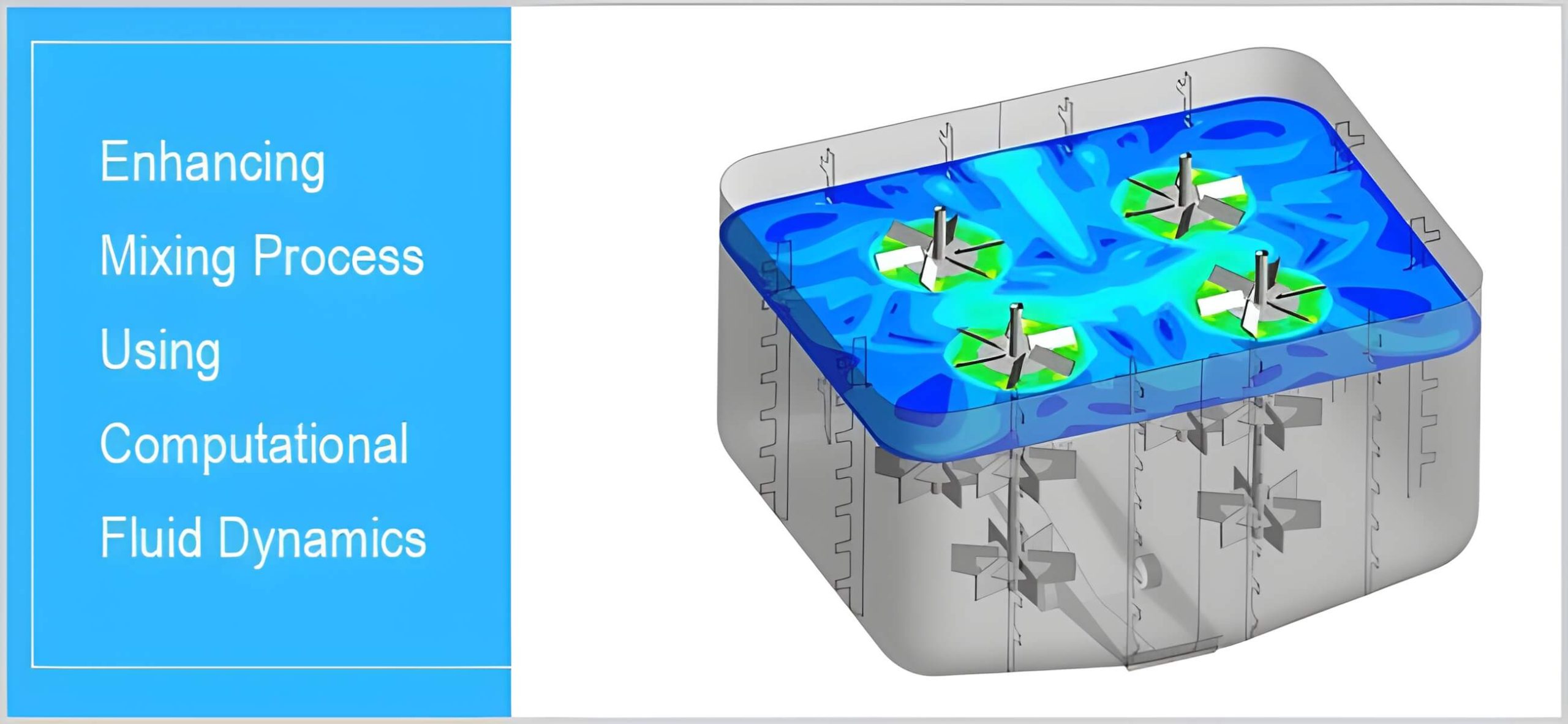
Mixing process is usually undertaken using mixing or agitating tanks utilizing impeller and baffles. However, the process may vary depending on how the substances are being mixed. The table below shows some of the common mixing processes according to physical and chemical applications.
Explore how CFD can enhance your equipment efficiency and safety
Reach out to our engineering team today.